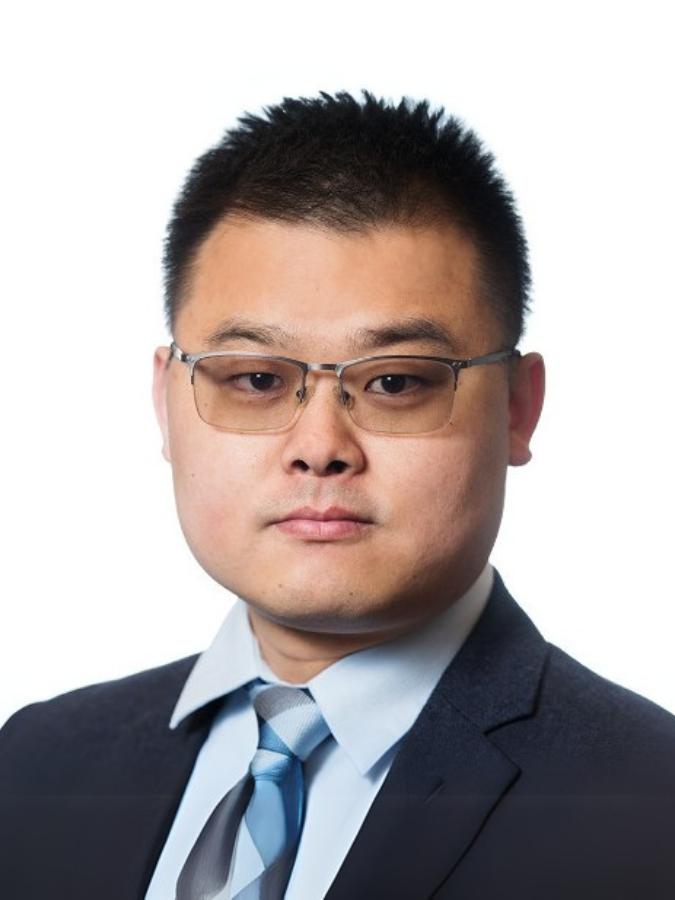
Biography
Academic background & research experience
Dalong Zhang is an Associate Professor of Mechanical Engineering at Baylor University and an affiliated faculty member in Baylor’s interdisciplinary Materials Science and Engineering program and Point-of-Need Innovations Center. His research asks how powder chemistry, thermomechanical processing, and microstructural evolution can be coordinated to create structural materials for demanding service.
At Baylor, Zhang leads an NSF–EPSRC project on the formation and dispersion of oxide particles during friction-based manufacturing of magnesium alloys. He also contributes to two active ARPA-E collaborations led by Pacific Northwest National Laboratory: additive friction surfacing for large steel components and FAVA-NSF nanoparticle-strengthened ferritic and vanadium alloys for fusion.
Before joining Baylor, Zhang worked as a materials scientist at Pacific Northwest National Laboratory, where he led solid-phase-processing research on oxide-dispersion-strengthened steels for fusion applications and developed scalable manufacturing approaches using gas-atomized reaction-synthesis powders, friction consolidation, and friction extrusion. Earlier, as a postdoctoral associate at Oak Ridge National Laboratory, he worked on neutron-irradiated FeCrAl alloys and radiation-driven microstructural change.
Zhang earned his Ph.D. in Materials Science and Engineering from the University of California, Davis. Across his research record, powder metallurgy and sustainable manufacturing are joined with advanced characterization and deformation science to understand how processing pathways govern structure, properties, and performance.