Baylor UniversityMechanical Engineering

Project

Ferritic and Vanadium Alloys with Nanoparticle Strengthening for Fusion

The ARPA-E FAVA-NSF program develops nanoparticle-strengthened ferritic and vanadium alloys for stronger, more irradiation-resistant fusion structures.

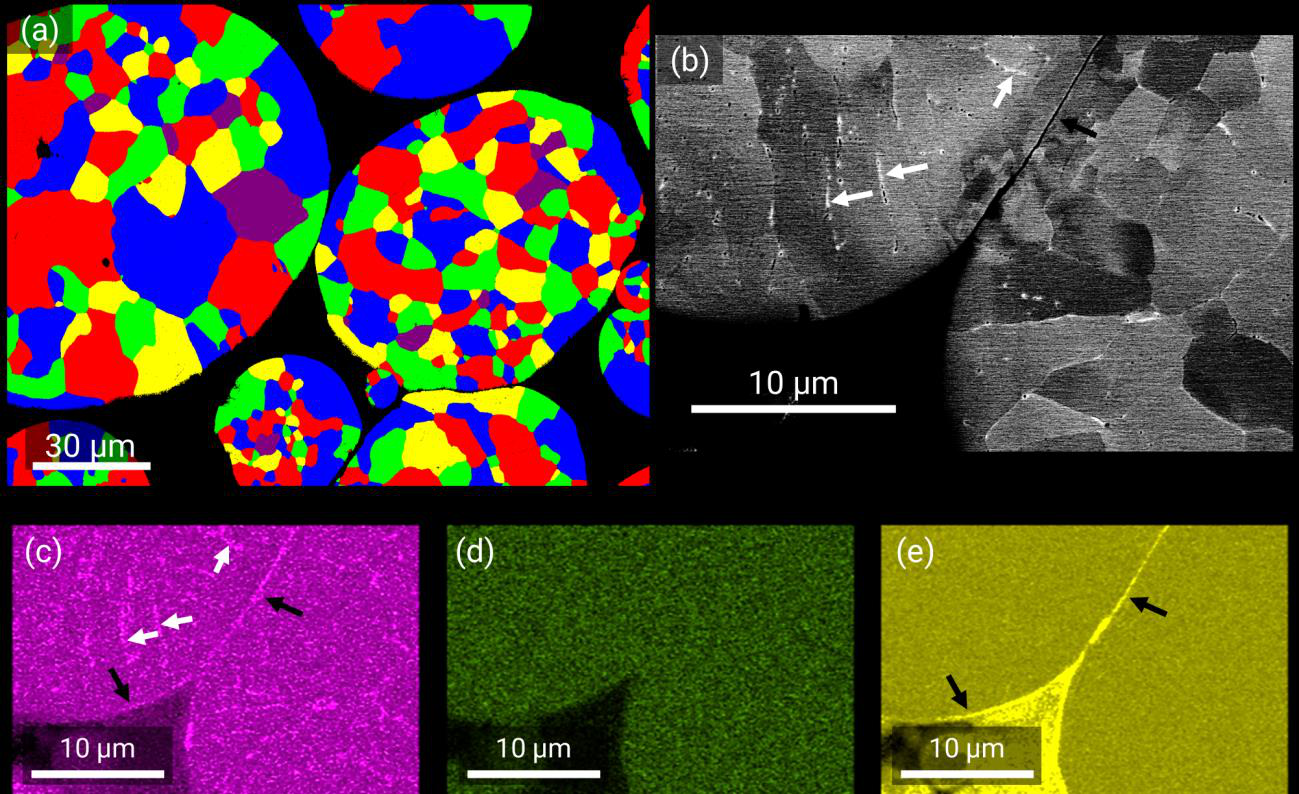
Microscopy and elemental maps of nanoparticle-strengthened oxide-dispersion steel powder from related fusion-material research
Related powder and particle characterization from Dr. Zhang’s dispersion-strengthened fusion-materials research.Zhang et al., Journal of Nuclear Materials (2022), Fig. 2 · Source ↗

Project overview

Pacific Northwest National Laboratory leads this ARPA-E CHADWICK project with Baylor University and other partners. The team makes ferritic and vanadium alloys from pure powders dispersed with nanoparticles selected to increase strength and irradiation resistance.

Powder is sprayed and friction-stir processed onto a surface to form plates. This near-room-temperature solid-phase route avoids melting-related microstructural inhomogeneity and supports the development of structural materials for fusion environments.

ferritic alloysvanadium alloysnanoparticle strengtheningnuclear fusion

Program focus

Create low-activation fusion alloys with nanoparticle strengthening and improved irradiation resistance without melt-processing inhomogeneity.

Partner organization contributing solid-phase processing and materials-characterization expertise.

  1. 01

    Disperse selected nanoparticles through pure alloy powders

  2. 02

    Spray powder onto a surface

  3. 03

    Consolidate plates by friction stir processing

  4. 04

    Evaluate strength and irradiation resistance for fusion service