Our three current programs investigate how friction-based processing disperses oxides and nanoparticles, builds large steel components, and creates magnesium and fusion alloys for demanding service.
01
Solid-Phase & Friction-Based Manufacturing
Shape materials through heat, shear, and pressure—without melting the whole feedstock.
We study friction extrusion, friction stir processing, additive friction stir deposition, and related severe-plastic-deformation routes to connect processing path with microstructure and performance.
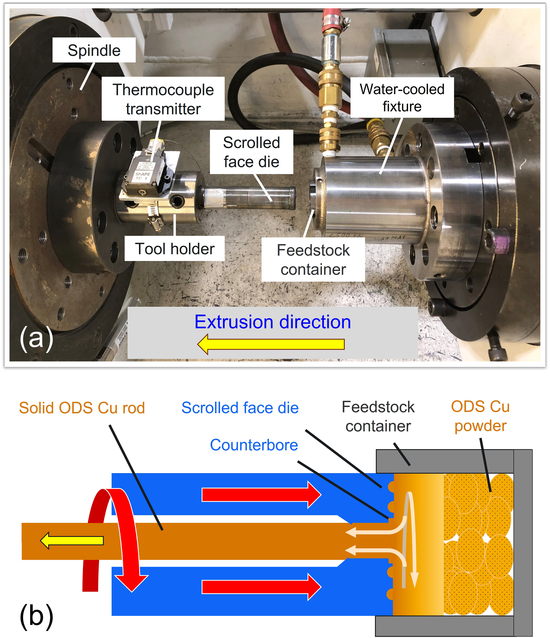
Experimental setup and sectional schematic for friction extrusion of an ODS copper rod from powder.Ma et al., Journal of Manufacturing Processes (2022), Fig. 2 · Source ↗02
Turn engineered powders into dense, stable structural materials.
Research examines powder synthesis, consolidation, oxide dispersion, and processing routes that reduce or replace conventional ball milling and long thermomechanical sequences.
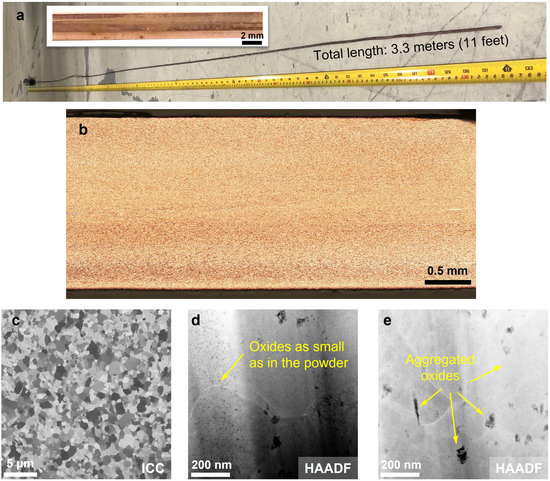
Three-meter ODS copper extrudate and representative refined microstructure produced from powder.Ma et al., Journal of Manufacturing Processes (2022), Fig. 3 · Source ↗03
Nuclear & Fusion Structural Materials
Connect microstructural stability with performance under heat and irradiation.
The research record spans FeCrAl alloys, nanostructured ferritic materials, oxide-dispersion-strengthened steels, irradiation effects, and manufacturing challenges for fission and fusion systems.
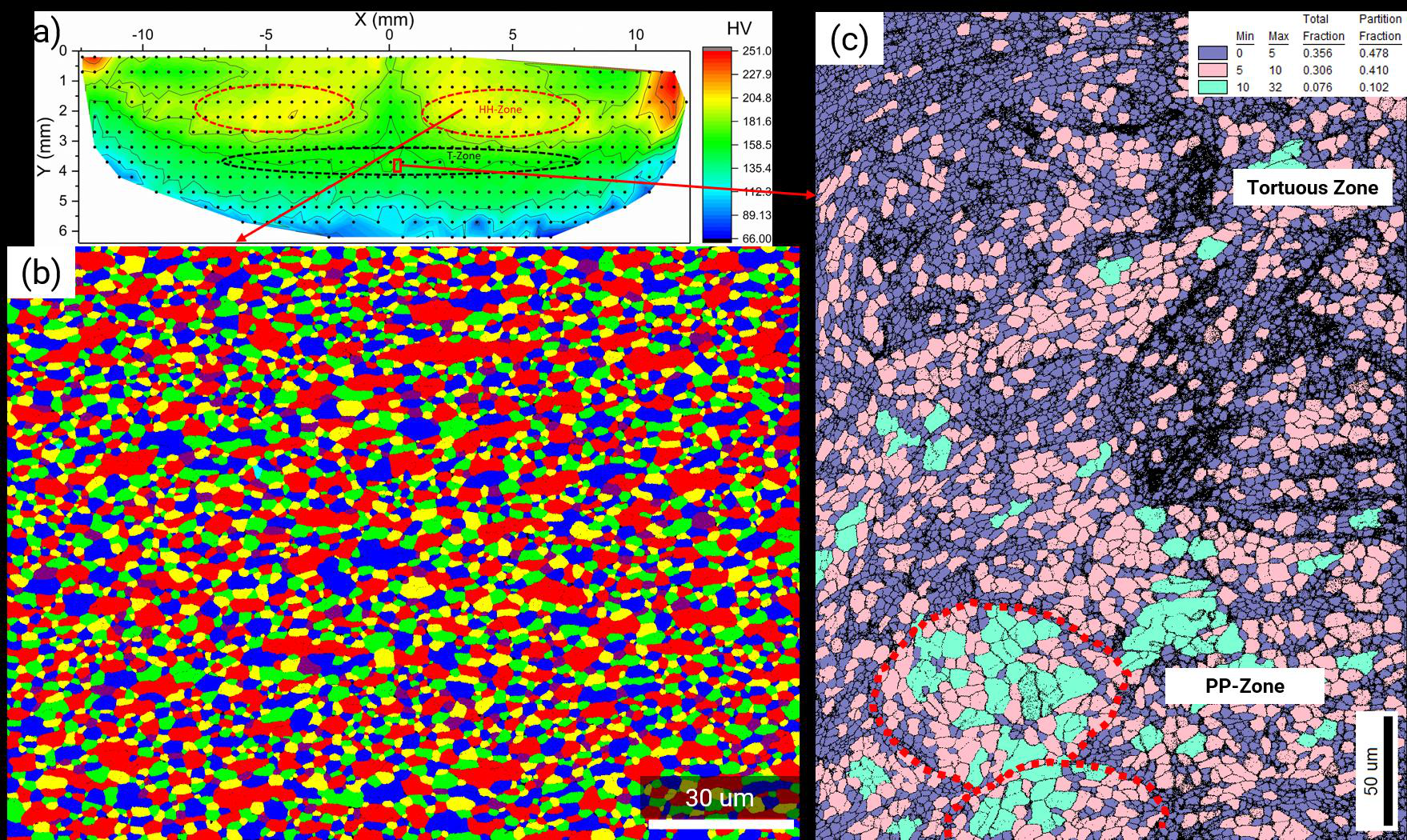
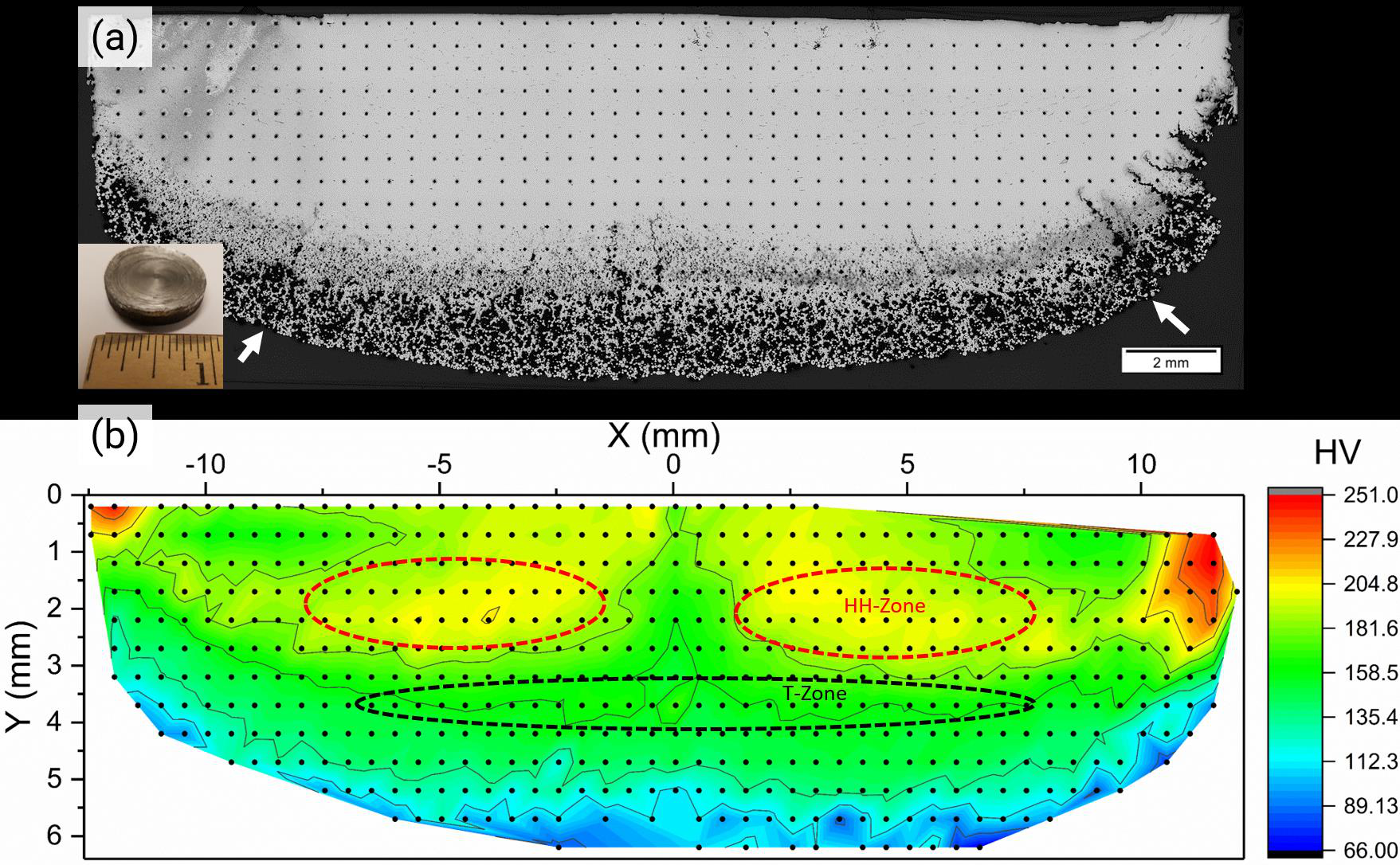
Hardness and EBSD grain maps across a friction-consolidated GARS-derived ODS steel puck.Zhang et al., Journal of Nuclear Materials (2022), Fig. 6 · Source ↗04
Magnesium & Lightweight Alloys
Resolve the deformation mechanisms that govern lightweight metals.
Work on magnesium links slip, twinning, stacking faults, texture, rare-earth additions, and solid-phase processing to strength, ductility, corrosion, and microstructural stability.
In situ TEMCrystal-defect analysisMechanical testingMg-YMg-Gd-Y
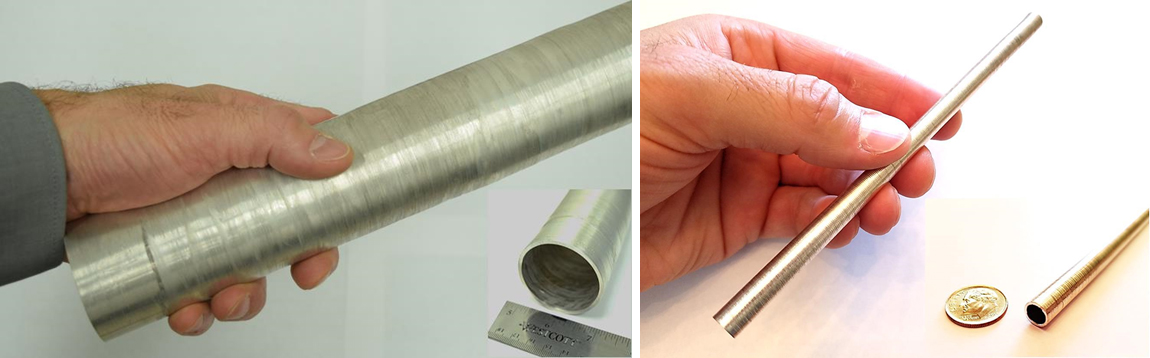
Friction-extruded ZK60 magnesium-alloy tubes produced with PNNL’s ShAPE process.S. Whalen / Pacific Northwest National Laboratory, CC0 · Source ↗05
Sustainable Metallurgy
Investigate shorter, lower-step routes for producing structural materials.
Verified work includes processing concepts that avoid prolonged ball milling, canning, degassing, or hot rolling. Broader energy and emissions claims remain subject to process-specific life-cycle evidence.
Process-chain comparisonSolid-state processingPowder consolidationODS steelsRecycled and powder feedstocks
Consolidated GARS-derived ODS steel cross-section and hardness distribution from a shortened process route.Zhang et al., Journal of Nuclear Materials (2022), Fig. 5 · Source ↗